
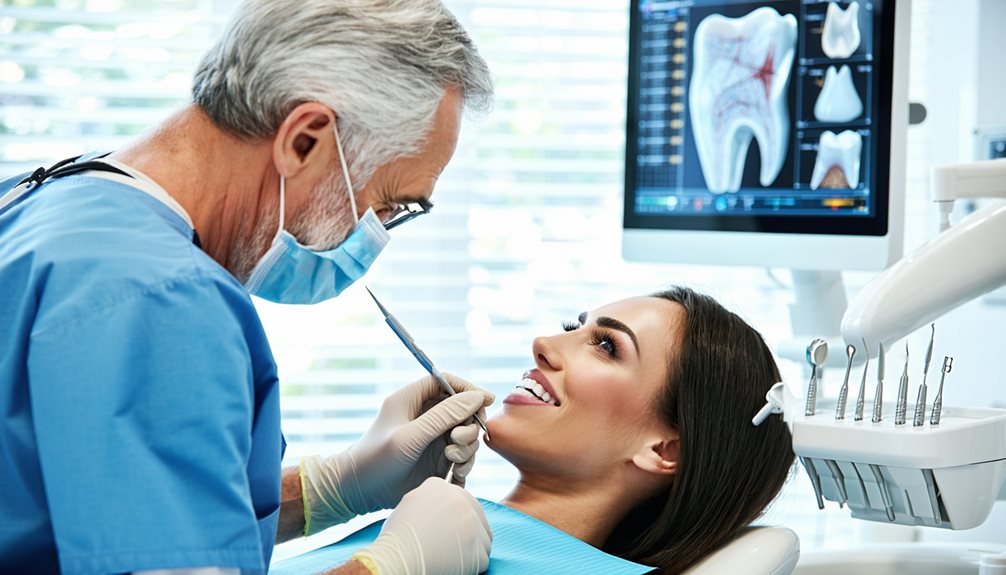
Leading experts in gum treatment include periodontists, oral surgeons, and general dentists with advanced sedation training. Periodontists specialize in managing periodontal disease and employ sedation techniques to enhance procedural precision and patient comfort. Oral surgeons are key for surgical interventions, expertly administering sedation to guarantee safety and pain management. Additionally, sedation-trained general dentists offer tailored approaches to anxiety reduction, improving compliance and treatment outcomes. Interdisciplinary collaboration enriches these methods, evident in the incorporation of advanced sedation protocols and innovative recovery techniques. Exploring their roles further reveals how these specialists optimize treatment efficacy and patient experiences.
Periodontists Specializing in Sedation
Periodontists specializing in sedation play a pivotal role in managing patients with dental anxiety or those undergoing extensive periodontal procedures. Their expertise is essential for ensuring ideal periodontal health, particularly in individuals who might otherwise avoid necessary treatments due to fear or discomfort.
Utilizing advanced sedation techniques, these specialists offer a spectrum of sedation benefits that include reduced patient anxiety, minimized discomfort, and enhanced procedural efficiency.
Scientific literature underscores the efficacy of sedation in facilitating complex periodontal interventions such as scaling and root planing, gingival grafting, and bone regeneration. By employing sedation, periodontists can perform intricate procedures with increased precision and effectiveness, ultimately improving treatment outcomes.
This approach not only enhances the patient’s experience but also contributes to the long-term maintenance of periodontal health, serving as a preventive measure against progressive periodontal disease.
Innovative sedation methodologies, such as conscious sedation and intravenous sedation, have been shown to greatly improve patient compliance and satisfaction. These methods are supported by evidence-based practices, ensuring safety and effectiveness.
As periodontal health continues to be a cornerstone of overall health, the role of sedation-specialized periodontists becomes increasingly indispensable in advancing dental care and treatment accessibility.
Oral Surgeons With Sedation Expertise
Oral surgeons with expertise in sedation play an essential role in facilitating pain-free surgical procedures, ensuring that patients experience minimal discomfort during interventions.
Adherence to rigorous sedation safety protocols is paramount, which includes pre-operative assessments and continuous intra-operative monitoring to mitigate risks.
In addition, these specialists employ advanced techniques to optimize recovery time, thereby enhancing patient outcomes and satisfaction.
Pain-Free Surgical Procedures
With advancements in dental medicine, the field of oral surgery has dramatically transformed through the integration of sedation techniques, ensuring minimally invasive and pain-free procedures.
This paradigm shift is driven by a focus on pain management and patient comfort, with oral surgeons employing state-of-the-art sedation methods to mitigate procedural anxiety and discomfort.
These innovations in sedation allow for a more controlled and precise surgical environment, minimizing patient distress and enhancing overall treatment outcomes.
Oral surgeons utilize a range of sedation modalities, including nitrous oxide, oral sedatives, and intravenous (IV) sedation, each tailored to the patient’s specific needs and the complexity of the procedure.
Evidence-based studies have demonstrated that these sedation techniques not only improve the patient experience but also facilitate ideal surgical conditions, reducing intraoperative stress responses and postoperative recovery times.
Sedation Safety Protocols
How do oral surgeons guarantee the safety of sedation techniques during dental procedures? The integration of meticulously crafted sedation guidelines guarantees a thorough approach to patient safety.
Oral surgeons with sedation expertise adhere to strict protocols to mitigate risks associated with sedative administration. These protocols encompass thorough pre-procedural evaluations to assess patient-specific factors such as medical history, allergies, and potential contraindications. An evidence-based approach underpins these assessments, guaranteeing individualized sedation plans are tailored to enhance patient safety.
Intraoperative patient monitoring is paramount, involving continuous assessment of essential signs to detect any deviations from baseline physiological parameters. Advanced monitoring technologies, such as capnography and pulse oximetry, provide real-time data, facilitating rapid intervention should complications arise.
Additionally, the interdisciplinary collaboration with anesthesiology professionals enhances the safety framework, guaranteeing expertise is leveraged across specialties.
- Pre-procedural evaluations: Thorough assessments to tailor sedation plans.
- Continuous monitoring: Real-time assessment of essential signs during the procedure.
- Advanced technologies: Use of capnography and pulse oximetry for enhanced monitoring.
- Interdisciplinary collaboration: Engagement with anesthesiology experts.
- Patient-centered approach: Individualized sedation protocols based on evidence-based guidelines.
Such measures exemplify the commitment to innovation in dental sedation safety, guaranteeing enhanced outcomes and patient confidence.
Recovery Time Optimization
Sedation safety protocols not only enhance patient safety during dental procedures but also play a notable role in improving recovery times. Oral surgeons with expertise in sedation understand that the integration of advanced sedation techniques can considerably reduce physiological stress, thereby fostering an environment conducive to accelerated healing.
Through precise administration and monitoring, these experts tailor sedation to minimize post-operative discomfort and facilitate a smoother shift to recovery.
Evidence-based recovery strategies are essential for enhancing outcomes in gum treatment. Surgeons employ innovative healing techniques, such as the use of biocompatible materials and growth factors that promote tissue regeneration.
These methods not only expedite the recovery process but also improve the quality of the healing tissues. The application of laser therapy, for instance, is a cutting-edge approach that reduces inflammation and enhances collagen production, leading to more efficient recovery.
Further innovations include personalized patient care plans that integrate digital monitoring tools to track healing progress in real-time.
This approach allows for timely interventions and adjustments to recovery strategies, ensuring ideal outcomes. By combining sedation expertise with these advanced recovery techniques, oral surgeons are at the forefront of transforming the post-operative experience, delivering both safety and efficiency.
General Dentists Trained in Sedation
General dentists trained in sedation play a pivotal role in managing patient anxiety and pain during dental procedures, guaranteeing a more comfortable and stress-free experience.
By employing advanced sedation techniques, these dental professionals cater to patients with varying levels of anxiety, thereby optimizing patient comfort. The integration of sedation into dental practice is a reflection of the evolving landscape of dentistry, prioritizing not only the efficacy of treatments but also the holistic well-being of the patient.
Sedation techniques such as nitrous oxide inhalation, oral sedation, and intravenous sedation are meticulously chosen based on individual patient needs and procedural requirements. This personalized approach underscores the importance of a tailored patient experience.
Evidence suggests that well-administered sedation can considerably reduce procedural stress and enhance overall patient satisfaction.
Benefits of general dentists trained in sedation:
- Enhanced patient comfort: Minimizes discomfort and anxiety during procedures.
- Improved cooperation: Patients are more likely to comply with necessary treatments.
- Flexible options: Various sedation methods tailored to individual needs.
- Increased safety: Training guarantees the safe administration of sedation.
- Broadened accessibility: Makes dental care more accessible to phobic or anxious patients.
Prosthodontists Using Sedation Techniques
Building upon the expertise of general dentists trained in sedation, prosthodontists also leverage sedation techniques to elevate the standard of care in oral rehabilitation.
Prosthodontists, renowned for their specialization in dental prosthetics, integrate sedation technology to facilitate complex procedures, thereby enhancing patient comfort and compliance. The incorporation of sedation in prosthodontics is particularly beneficial for extensive restorative treatments, including full mouth reconstructions and implant placements, where procedural intricacy and patient anxiety are prevalent.
Prosthodontic advancements have notably evolved with the advent of sedation technology, promoting a paradigm shift towards patient-centered care. Techniques such as intravenous sedation and oral sedatives allow prosthodontists to perform intricate rehabilitative work with minimized patient discomfort and heightened precision.
This sedation-enabled approach not only optimizes procedural outcomes but also expands treatment accessibility for patients with severe dental phobias or complex medical conditions.
Furthermore, evidence-based research supports the efficacy and safety of sedation in prosthodontics, underscoring its role in reducing intraoperative stress and improving postoperative recovery.
As the dental field progresses, the innovative fusion of prosthodontic advancements and sedation technology continues to redefine therapeutic boundaries, ensuring superior patient experiences and clinical outcomes.
Endodontists Offering Sedation Options
Endodontists are increasingly incorporating sedation options to enhance patient comfort and compliance during complex endodontic procedures.
The benefits of sedation dentistry include reduced anxiety, pain management, and improved procedural outcomes, with various sedation modalities such as nitrous oxide, oral sedation, and intravenous sedation available to tailor to patient-specific needs.
Selecting the right endodontist involves evaluating their expertise in both endodontic care and sedation techniques, ensuring a high standard of safety and efficacy.
Benefits of Sedation Dentistry
Frequently, patients undergoing complex dental procedures can experience heightened anxiety or discomfort, which underscores the importance of sedation dentistry. This innovative approach provides profound sedation benefits, allowing endodontists to alleviate anxiety and enhance patient comfort.
By employing evidence-based sedation techniques, dental professionals create a more serene environment conducive to successful outcomes.
Sedation dentistry, particularly when utilized by skilled endodontists, offers significant advantages:
- Anxiety Reduction: Sedation helps diminish patient apprehension, facilitating smoother procedures.
- Pain Management: Patients experience reduced perception of pain, promoting a more tolerable dental experience.
- Procedure Efficacy: With minimized distress, endodontists can perform intricate treatments with increased precision and efficiency.
- Time Efficiency: Allows for longer procedures to be completed in fewer visits, optimizing the treatment timeline.
- Enhanced Cooperation: Patients are more amenable to treatment, reducing the risk of sudden movements that could compromise procedure quality.
Incorporating sedation options aligns with contemporary dental innovations, meeting the expectations of a clientele that values cutting-edge solutions.
Types of Sedation Available
A multitude of sedation options are available to endodontists, each tailored to meet specific patient needs and clinical situations. These options range from minimal to deep sedation, ensuring a thorough approach to patient comfort and anxiety management.
Nitrous oxide, commonly known as laughing gas, is a popular choice for minimal sedation, offering rapid onset and recovery with minimal side effects. For moderate sedation, oral sedatives such as benzodiazepines are frequently utilized, providing effective anxiolysis without the need for invasive procedures.
Intravenous (IV) sedation represents a deeper level of sedation, allowing for precise control over sedation depth and rapid adjustments as needed. This method is particularly beneficial in debunking sedation myths that may deter patients, emphasizing its safety and efficacy under the supervision of trained professionals.
Additionally, for patients seeking sedation alternatives, endodontists may offer conscious sedation techniques, which combine pharmacological and non-pharmacological methods to optimize the patient experience.
The selection of a sedation technique is a nuanced process that considers patient health status, anxiety levels, and procedural requirements.
Choosing the Right Endodontist
When considering the myriad sedation options available in modern endodontic practice, selecting the right endodontist becomes essential to guaranteeing a safe and effective treatment experience.
Endodontists, specialists in root canal therapy and related procedures, increasingly offer advanced sedation techniques to enhance patient comfort and mitigate procedural anxiety. Given the complexity of endodontic techniques, it is vital to choose a professional who not only possesses clinical expertise but also demonstrates a commitment to innovative sedation practices.
In making this selection, one must evaluate several key factors:
-
Sedation Credentials: Verify the endodontist’s qualifications and training in sedation methods, confirming they hold appropriate certifications.
-
Technology Utilization: Consider their use of state-of-the-art technology to perform precise and minimally invasive procedures.
-
Patient Testimonials: Review feedback from previous patients regarding sedation experiences and overall satisfaction.
-
Customized Sedation Plans: Confirm the endodontist offers tailored sedation plans that align with individual patient needs and comfort levels.
-
Evidence-Based Practices: Assess their commitment to employing evidence-based endodontic techniques, which integrate the latest research findings for peak outcomes.
Ultimately, the right endodontist will seamlessly blend technical proficiency with a patient-centered approach, leveraging sedation to transform the endodontic experience into one of utmost comfort and effectiveness.
Pediatric Dentists Skilled in Sedation
Pediatric dentists skilled in sedation play a critical role in managing dental anxiety and guaranteeing the success of complex procedures in young patients. These specialists employ pediatric sedation techniques to alleviate anxiety and enhance cooperation, making dental visits less intimidating for children. This approach is particularly beneficial for patients with heightened dental anxiety or those requiring extensive treatment, as it facilitates a calm and receptive environment.
The application of sedation in pediatric dentistry is a demonstration of the innovative strides being made in the field. Techniques such as nitrous oxide inhalation, oral conscious sedation, and intravenous sedation are tailored to the unique physiological and psychological needs of children. Evidence-based protocols confirm that sedation is administered safely, with continuous monitoring of essential signs to mitigate risks. This personalized care underscores the importance of having a skilled pediatric dentist who can navigate these complexities.
Research indicates that effective management of dental anxiety through sedation not only improves immediate treatment outcomes but also fosters positive long-term attitudes towards oral health.
As the demand for specialized care grows, pediatric dentists adept in sedation are pivotal in transforming intimidating dental experiences into manageable ones, thereby promoting lifelong oral health in their young patients.
Frequently Asked Questions
What Is the Best Type of Sedation for Gum Treatment?
The best type of sedation for gum treatment varies based on sedation options, prioritizing patient comfort. Intravenous sedation, offering controlled dosage and rapid onset, is often preferred, ensuring minimal discomfort, enhanced procedural efficiency, and ideal patient satisfaction through evidence-based practice.
How Does Sedation Impact Recovery Time After Gum Treatment?
Sedation techniques can influence recovery time post-gum treatment by affecting physiological responses. Adhering to recovery guidelines tailored to specific sedation methods improves healing outcomes. Innovative protocols focusing on individualized sedation and recovery strategies can enhance patient recovery experiences and efficiencies.
Are There Any Side Effects of Sedation During Gum Treatment?
Sedation during gum treatment may present side effects, including respiratory depression, hypotension, and allergic reactions. Awareness of sedation risks is essential for clinicians to minimize complications and guarantee patient safety, facilitating innovative, evidence-based periodontal care practices.
Can Sedation Be Used for All Types of Gum Procedures?
Sedation types, such as local anesthesia, oral sedation, or intravenous sedation, can enhance patient comfort during gum procedures. However, the appropriateness depends on the procedure’s complexity and patient health, necessitating a personalized, evidence-based approach by dental professionals.
How Do I Prepare for a Sedated Gum Treatment Session?
To effectively prepare for a sedated gum treatment session, adhere to a pre-treatment checklist including fasting protocols and medication review. Employ anxiety management techniques such as deep breathing exercises, ensuring ideal physiological readiness and mental tranquility for innovative periodontal care.
Conclusion
In the domain of gum treatment, a multidisciplinary approach involving sedation is increasingly recognized for its efficacy in enhancing patient comfort and procedural success. Periodontists, oral surgeons, general dentists, prosthodontists, endodontists, and pediatric dentists, each bring specialized sedation techniques to their respective fields. These professionals leverage sedation expertise to improve patient outcomes, minimize procedural anxiety, and facilitate complex oral interventions. Such integration of sedation into dental practices underscores its critical role in contemporary periodontal and related dental treatments.

