
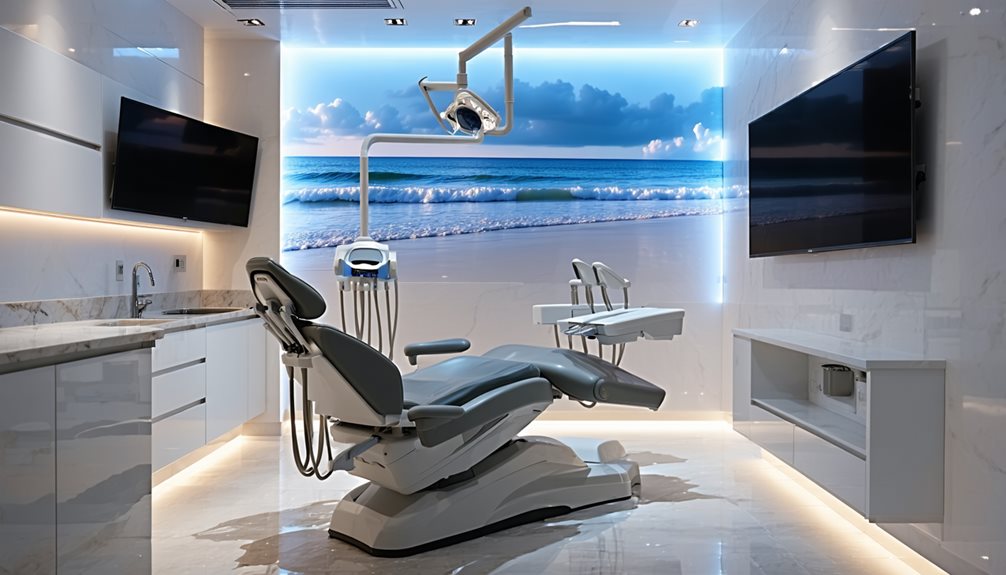
Leading dental professionals utilize elite sedation methods, integrating cutting-edge techniques and innovations. Conscious sedation provides a seamless integration of sedatives and analgesics, improving patient cooperation and comfort. Intravenous sedation introduces significant advancements with rapid-onset anesthetics and computerized monitoring systems for enhanced safety and precision. Oral sedation protocols optimize patient outcomes through tailored pharmacological regimens, while intranasal sedation offers a non-invasive alternative with swift absorption. Nitrous oxide remains a cornerstone, noted for its rapid efficacy and safety. Patient-centric strategies guarantee treatments align with individualized needs, accentuating care quality. Discover how these methodologies continue to evolve to transform dental care experiences.
Conscious Sedation Techniques
Conscious sedation techniques, a cornerstone in patient-centered anesthetic care, enable medical professionals to perform procedures while guaranteeing patient comfort and cooperation.
These techniques are pivotal in managing patient anxiety, a common hindrance in dental and medical procedures. By administering a combination of sedatives and analgesics, conscious sedation guarantees patients remain relaxed and responsive, enhancing the procedural experience. The benefits of conscious sedation extend beyond anxiety relief; it facilitates a smoother procedural workflow by minimizing patient movement and discomfort, thereby optimizing outcomes.
In the domain of dental care, conscious sedation is particularly advantageous. It empowers practitioners to address extensive dental work in a single session, mitigating the need for multiple appointments. This approach is not only time-efficient but also reduces the cumulative anxiety experienced by patients over successive visits.
Additionally, conscious sedation is adaptable, allowing for dose adjustments tailored to the specific needs and anxiety levels of the patient, which underscores its personalized nature.
The innovation-driven healthcare environment continually seeks to refine these sedation techniques, promoting advancements that prioritize safety and efficacy. In doing so, conscious sedation remains an invaluable tool, marrying patient comfort with procedural precision.
Intravenous Sedation Innovations
Intravenous sedation has undergone significant advancements with the development of novel pharmacological agents and delivery systems aimed at optimizing sedation protocols.
These innovations prioritize patient safety and comfort by offering enhanced precision in dosage and faster onset of action, thereby improving the overall patient experience.
Advanced Sedation Techniques
Frequently at the forefront of medical advancements, intravenous sedation techniques have revolutionized patient care by offering enhanced precision and control during procedures. By employing sophisticated sedation technology, dental professionals can administer tailored dosages, maximizing patient safety and comfort.
The integration of computerized systems allows for meticulous monitoring of essential signs, ensuring immediate adjustments in sedation levels when necessary. This advancement mitigates risks associated with over-sedation while maintaining the desired depth of sedation for procedural efficacy.
Recent innovations in intravenous sedation include the utilization of pharmacokinetic models that predict the pharmacodynamics of sedatives in real-time. These models enable practitioners to foresee the patient’s response to sedation, allowing for preemptive modifications and reducing the incidence of adverse reactions.
Additionally, the incorporation of bispectral index (BIS) monitoring provides an objective measure of sedation depth, enriching the clinician’s ability to maintain ideal sedation states.
Furthermore, the development of rapid-reversal agents has augmented the safety profile of intravenous sedation. These agents can swiftly negate the effects of sedatives, ensuring a quick recovery for patients post-procedure.
As these advanced techniques become more prevalent, they exemplify a commitment to improving patient outcomes through innovation, precision, and safety in sedation practices.
Enhanced Patient Experience
Elevating the patient experience during medical procedures has become essential, with recent innovations in intravenous sedation playing a crucial role. This cutting-edge approach addresses the growing demand for enhanced patient comfort and anxiety reduction, thereby transforming dental care into a more pleasant experience.
Intravenous sedation, known for its rapid onset and precise controllability, offers unparalleled benefits in tailoring sedation levels to individual needs, ensuring ideal patient comfort.
Advancements in pharmacology and monitoring technologies have further refined intravenous sedation techniques. The integration of real-time monitoring systems allows dental professionals to maintain vigilant oversight of critical parameters, thereby enhancing safety and efficacy.
This meticulous attention to patient-specific sedation requirements not only minimizes procedural stress but also greatly contributes to anxiety reduction, a key factor for patients with dental phobias or heightened apprehension.
Patient-centric innovations in intravenous sedation are also facilitated by the utilization of agents with improved pharmacokinetic profiles, ensuring smooth induction and recovery phases.
Such enhancements in sedation protocols underscore a commitment to patient safety and satisfaction, fostering trust and encouraging proactive participation in dental health maintenance.
Ultimately, these innovations represent a paradigm shift in dental sedation, where patient comfort and anxiety reduction are at the forefront of procedural priorities.
Oral Sedation Advancements
Recent advancements in oral sedation have markedly enhanced patient comfort and procedural efficiency in dental and medical settings. These innovations are underpinned by refined oral sedation protocols, ensuring that patient safety remains paramount while optimizing the sedation experience.
Oral sedation safety has been greatly improved through the development of tailored pharmacological regimens that are both predictable and effective, minimizing adverse effects and maximizing patient compliance.
The integration of cutting-edge pharmacokinetics and pharmacodynamics has enabled practitioners to fine-tune dosages based on individual patient profiles, thereby ensuring a highly personalized sedation plan. This precision is essential in reducing the incidence of over-sedation or prolonged recovery times, enhancing overall patient satisfaction.
Furthermore, advancements in patient monitoring technologies have provided practitioners with the tools to continually assess patient vitals, ensuring prompt detection of any signs of distress or complications.
In addition, enhanced oral sedation protocols now include extensive pre-sedation assessments, taking into account a patient’s medical history, current medications, and potential drug interactions. This meticulous approach not only boosts oral sedation safety but also fosters a more streamlined process, ultimately advancing the quality of care.
As a result, patients and practitioners alike benefit from a more predictable and controlled sedation experience.
Nitrous Oxide Applications
Nitrous oxide, commonly known as "laughing gas," remains an essential component in the arsenal of sedation techniques, particularly due to its rapid onset and ease of administration. This inhalation agent provides dentists with a flexible and efficient method to manage patient anxiety and discomfort during procedures.
The nitrous benefits extend beyond its anxiolytic properties, as it also offers analgesic effects, which can enhance patient experience and procedural efficiency.
The administration of nitrous oxide is straightforward, involving a calibrated delivery system that allows for precise titration. This capability guarantees the ideal balance between sedation and patient responsiveness, facilitating communication when necessary.
Safety is paramount, and nitrous safety is well-established through decades of clinical use. The gas is quickly eliminated from the body upon cessation, allowing patients to recover promptly with minimal side effects.
In innovative dental practices, nitrous oxide is increasingly integrated into extensive sedation protocols. Its compatibility with other sedation methods allows for customizable patient-centered approaches.
As dental technology advances, the role of nitrous oxide continues to evolve, offering enhanced patient comfort and procedural success. The ongoing focus on nitrous benefits and safety cements its place in modern dentistry.
Intranasal Sedation Developments
Building on the established foundation of nitrous oxide, the exploration of intranasal sedation developments marks a significant advancement in patient-centered sedation techniques.
Intranasal delivery of sedatives such as midazolam has shown promising results, offering a non-invasive alternative to traditional intravenous or oral administration. The nasal mucosa’s rich vascularization facilitates rapid systemic absorption, leading to quick sedation onset and predictable pharmacokinetics. This precision is particularly beneficial for patients with needle phobia or those requiring minimal intervention for effective sedation.
Furthermore, the controlled dosing and reduced risk of systemic side effects contribute to a safer sedation profile, aligning with the ethos of patient safety and comfort. The adaptability of intranasal sedation is also remarkable, accommodating pediatric and special needs populations with ease.
As research progresses, continuous improvements in formulation and delivery mechanisms are anticipated, reinforcing intranasal sedation as a viable, cutting-edge solution within modern dentistry. Through such advancements, dental professionals can enhance patient experiences, embodying the commitment to innovative, patient-focused care.
Patient-Centric Sedation Strategies
Patient-centric sedation strategies prioritize the individual needs and preferences of patients, ensuring a tailored approach to sedation that maximizes comfort and minimizes anxiety. This individualized methodology integrates a thorough assessment of patient-specific factors, such as medical history, psychological state, and past sedation experiences, to formulate an ideal sedation plan.
By utilizing advanced diagnostic tools and patient feedback mechanisms, dentists can achieve personalized comfort, addressing both physiological and psychological dimensions of sedation.
Central to these strategies is the implementation of anxiety reduction techniques. This involves employing pharmacological and non-pharmacological interventions that cater to the patient’s unique anxiety triggers. Innovative sedation technologies, such as electro-analgesia and patient-controlled sedation devices, empower patients to modulate their sedation levels in real-time, enhancing their sense of control and safety during dental procedures.
Furthermore, patient-centric sedation emphasizes the importance of communication and education. By fostering an open dialogue and providing extensive information about the sedation process, patients are more likely to feel at ease and informed about their treatment options.
This approach not only enhances patient satisfaction but also promotes adherence to sedation protocols, ultimately facilitating a seamless and comforting dental experience.
Frequently Asked Questions
How Do Different Sedation Methods Affect Dental Treatment Duration?
Different sedation methods impact dental treatment duration by varying sedation effectiveness and treatment efficiency. Ideal sedation enhances patient comfort, minimizes movement, and allows for streamlined procedures, ultimately reducing overall time while maintaining high-quality outcomes and patient satisfaction.
Are There Any Long-Term Effects of Dental Sedation on Health?
Long-term effects of dental sedation on health are generally minimal, but sedation safety remains paramount. Potential health risks include respiratory issues and cardiovascular reactions. Innovative monitoring and personalized protocols guarantee patient-focused care, minimizing adverse outcomes effectively.
What Are the Costs Associated With Various Dental Sedation Techniques?
The costs associated with dental sedation techniques vary considerably. A thorough cost comparison reveals sedation pricing influenced by factors such as method complexity, duration, and practitioner expertise. Patient-focused innovations continue to shape affordability and accessibility in sedation services.
How Can Patients Prepare for Sedation During Dental Procedures?
Patients can prepare for sedation by adhering to pre-sedation guidelines, including fasting and avoiding certain medications. Effective patient communication is essential for understanding individualized instructions, ensuring ideal safety and enhancing the overall experience of innovative dental procedures.
Are There Non-Medical Alternatives to Manage Dental Anxiety Effectively?
Non-medical alternatives, such as mindfulness techniques and structured breathing exercises, provide effective solutions for managing dental anxiety. These approaches focus on enhancing patient comfort through cognitive behavioral strategies, promoting relaxation, and fostering a positive dental experience.
Conclusion
The exploration of advanced sedation methodologies underscores significant progress in dental care, prioritizing patient comfort and safety. Innovations in intravenous and intranasal sedation, alongside advancements in oral techniques, enhance efficacy and patient compliance. Nitrous oxide continues to be a reliable option, offering rapid onset and recovery. The integration of patient-centric strategies guarantees tailored sedation plans, aligning with individual needs and clinical requirements. These developments collectively contribute to improved patient experiences and outcomes in dental practices.

