
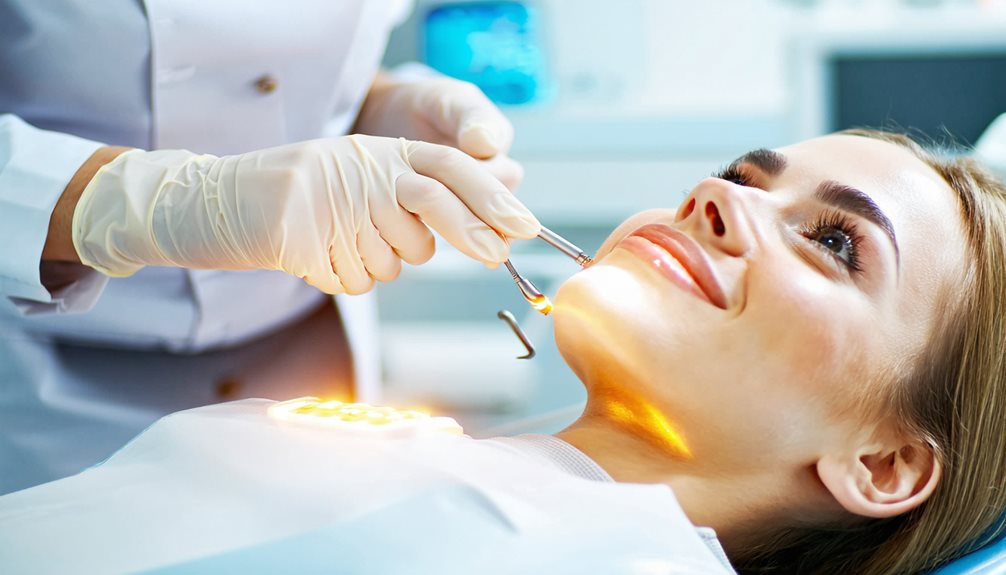
Identifying top sedation experts for root canal procedures requires focusing on their adeptness in safe, effective sedation techniques and advanced pain management. These experts possess certifications in conscious sedation and proficiency in tailored sedation plans that consider patient medical histories and procedural intricacies. They employ technologies like computer-controlled anesthesia and specialized diagnostic tools to optimize outcomes. Patient-centric approaches highlight personalized care and anxiety reduction, essential for comfortable procedures. Evaluating credentials, board certifications, and patient reviews helps in selecting the most qualified experts. Exploring the integration of innovative sedation methods and patient feedback can reveal greater insights into successful outcomes.
Leading Sedation Dentists
Leading sedation dentists play an essential role in ensuring patient comfort and safety during root canal procedures by employing advanced sedation techniques tailored to individual needs. Their expertise in sedation safety is paramount, as they must balance efficacy with the minimization of potential risks.
Sedation safety involves meticulous monitoring of crucial signs, ensuring that sedation levels are appropriate, and possessing the ability to rapidly respond to any adverse reactions. These dentists are distinguished by their extensive qualifications, which extend beyond general dentistry to include specialized training in sedation practices. Such qualifications typically encompass certification in conscious sedation, extensive clinical experience, and adherence to stringent regulatory standards.
The continuous evolution of sedation methods has necessitated that leading sedation dentists remain at the forefront of innovation. They employ cutting-edge tools such as capnography to monitor carbon dioxide levels, ensuring ideal respiratory function throughout the procedure.
Furthermore, the integration of digital tools for facilitating precise dosage calculations exemplifies their commitment to leveraging technology for enhanced patient outcomes. These advancements in sedation techniques not only elevate the standard of care but also expand the scope of dental procedures that can be performed comfortably and safely, which broadens access to necessary dental interventions.
Renowned Root Canal Specialists
Renowned root canal specialists employ expert sedation techniques to guarantee patient comfort and ideal procedural outcomes.
These specialists utilize advanced root canal procedures, incorporating cutting-edge technology and methodologies to enhance precision and effectiveness.
Expert Sedation Techniques
In the domain of endodontic procedures, the implementation of expert sedation techniques is essential for ensuring patient comfort and procedural success. Employing sedation methods that prioritize sedation safety and anxiety reduction is paramount in modern dental practice.
The integration of cutting-edge pharmacological agents and precise dosing strategies allows practitioners to tailor sedation levels to the individual needs of patients, minimizing risks and enhancing the overall treatment experience.
Renowned root canal specialists are at the forefront of these innovations, utilizing both oral and intravenous sedation options to manage patient anxiety effectively. These techniques are meticulously designed to maintain a delicate balance between sedation depth and patient responsiveness, ensuring ideal conditions for both patient and practitioner.
Advanced monitoring technologies further contribute to sedation safety by providing real-time data on patient critical signs, allowing for immediate adjustments to sedation levels as required.
The inclusion of patient-centric approaches, such as thorough pre-procedural consultations and personalized sedation plans, underscores the commitment of leading specialists to anxiety reduction.
Advanced Root Canal Procedures
How do renowned root canal specialists achieve such high levels of precision and success in advanced procedures? The answer lies in their mastery of advanced techniques and commitment to patient comfort.
Specialists employ cutting-edge technologies like cone-beam computed tomography (CBCT) for meticulous pre-procedural planning, enabling them to visualize complex root canal anatomies in three dimensions. This technological advantage allows for precise navigation and treatment of intricate root systems, greatly enhancing procedural outcomes.
In parallel, the use of operative microscopes amplifies visibility and accuracy, allowing specialists to perform delicate maneuvers with unparalleled precision.
Furthermore, innovations in rotary instrumentation and irrigation techniques guarantee thorough debridement and disinfection of the root canal system, reducing the risk of post-procedural complications.
Patient comfort remains a cornerstone of these advanced procedures. Specialists integrate sedation modalities tailored to individual patient needs, guaranteeing a tranquil and stress-free experience.
This personalized approach not only alleviates anxiety but also enhances cooperation, facilitating the execution of intricate procedures.
Top-Rated Dental Anesthetists
The expertise of top-rated dental anesthetists is characterized by their proficiency in administering and monitoring anesthesia tailored to individual patient needs during root canal procedures.
Selecting the right anesthetist involves evaluating their credentials, experience, and familiarity with the latest sedation techniques to guarantee ideal patient comfort and safety.
Additionally, their ability to manage potential complications and adapt to varying patient responses is integral to successful outcomes.
Skills of Dental Anesthetists
Mastery of sedation in dental procedures, particularly in root canal treatments, requires an extensive skill set unique to dental anesthetists. These professionals are adept at employing advanced anesthesia techniques, ensuring patient comfort while maintaining ideal sedation safety. Their capability to tailor sedation plans to individual patient needs is crucial, taking into account variables such as medical history and procedural complexity.
Dental anesthetists employ a range of techniques, from local anesthetics to intravenous sedation, each with specific protocols tailored to minimize risk and enhance efficacy. Their proficiency in pharmacology is essential, as it allows them to select the appropriate agents, adjust dosages, and anticipate interactions.
In addition, they are skilled in monitoring physiological responses, using state-of-the-art equipment to track critical signs, ensuring that patients remain stable throughout the procedure.
Furthermore, dental anesthetists are trained to respond swiftly to emergencies, possessing the acumen to manage potential complications with precision. Their expertise in airway management and resuscitation is essential, adding an additional layer of safety.
This combination of technical knowledge and practical application makes dental anesthetists indispensable in modern dental care, driving innovation and elevating the standards of patient-centric sedation practices.
Selecting the Right Expert
Maneuvering the selection of a top-rated dental anesthetist involves a meticulous evaluation of credentials, experience, and patient reviews. This process demands an in-depth understanding of the anesthetist’s educational background, board certifications, and specialized training in dental sedation.
Evaluating credentials is paramount to guarantee the professional possesses advanced knowledge in pharmacology and anesthesia techniques tailored for endodontic procedures. Additionally, scrutinizing their practical experience, particularly with root canal treatments, provides insights into their capability to manage varied sedation levels effectively.
Beyond credentials, patient testimonials offer invaluable perspectives on the anesthetist’s competence and bedside manners. These firsthand accounts can illuminate the expert’s ability to alleviate patient anxiety, maintain effective communication, and deliver satisfactory outcomes.
Patient testimonials provide qualitative data that can reveal the practitioner’s consistency in delivering a pain-free experience and their adaptability to unique patient needs.
Ultimately, selecting the right dental anesthetist necessitates a careful balancing act between empirical credentials and qualitative patient feedback.
This strategic selection process guarantees a seamless, anxiety-free root canal procedure, resulting in ideal patient satisfaction and clinical outcomes.
Expert Pain Management Techniques
Pain management is a critical component in the field of endodontics, particularly during root canal procedures.
The integration of localized anesthetics with precision dosing is a cornerstone, minimizing discomfort and optimizing nerve blockade. Techniques such as the use of buffered lidocaine enhance the onset and duration of anesthesia, providing superior pain control.
Anxiety reduction is paramount in mitigating the psychological components of pain perception. Techniques like cognitive-behavioral therapy (CBT) and guided imagery are employed to foster a calming environment, reducing patient apprehension. In addition, the application of topical anesthetics prior to injection can notably reduce needle-related anxiety, improving overall patient experience.
Incorporating cutting-edge technology, such as electronic dental anesthesia, provides a non-invasive alternative to traditional methods, appealing to patients apprehensive about needles. This modality employs low-frequency electrical currents to modulate pain pathways, offering an innovative solution for pain management.
These expert techniques not only alleviate discomfort but also enhance patient satisfaction and procedural outcomes in root canal treatments.
Advanced Sedation Technologies
In the domain of endodontics, advanced sedation technologies have become instrumental in enhancing patient comfort during root canal procedures. These innovations focus on minimizing discomfort and anxiety, guaranteeing that patients experience minimal distress. A crucial aspect of these technologies is sedation safety, which is of paramount importance.
Modern sedation methods, such as computer-controlled local anesthetic delivery systems, allow for precise dosing, reducing the risk of complications and enhancing patient comfort. These systems utilize real-time feedback to adjust the sedation levels, providing a tailored approach that meets individual patient needs.
Intravenous (IV) sedation is another advanced technique that offers rapid onset and adjustable sedation depth, providing superior control over patient anxiety. This method is particularly beneficial for complex procedures, where prolonged sedation might be required.
In addition, the integration of advanced monitoring systems guarantees continuous assessment of the patient’s essential signs, thereby enhancing sedation safety.
Moreover, advancements in pharmacology have led to the development of new sedative agents that are both effective and have a shorter half-life, reducing recovery times. These agents are designed to provide a calm and relaxed state without compromising safety, thereby revolutionizing the patient experience in root canal therapy.
Patient-Centric Care Approaches
Building upon the advancements in sedation technologies, the focus shifts to patient-centric care approaches, which prioritize individualized treatment plans and patient involvement in decision-making. Central to this paradigm is the enhancement of patient comfort and anxiety reduction during root canal procedures.
By integrating advanced diagnostic tools and patient feedback mechanisms, dental professionals can devise tailored sedation strategies that align with each patient’s unique physiological and psychological needs.
Patient-centric care involves a thorough pre-procedural assessment, which evaluates not only the patient’s medical history but also their anxiety triggers and comfort preferences. This data informs the selection of sedation modalities, ranging from local anesthesia to conscious sedation, ensuring ideal patient comfort and minimizing procedural anxiety.
In addition, real-time monitoring and adaptive sedation techniques can be employed to dynamically adjust sedation levels, maintaining patient safety and comfort throughout the procedure.
Involving patients in the decision-making process empowers them, reducing anxiety through informed consent and clear communication. By fostering an environment of trust and transparency, practitioners can greatly enhance the overall patient experience.
The culmination of these innovative approaches not only leads to successful root canal outcomes but also sets a new standard for patient-centric dental care.
Frequently Asked Questions
How Does Sedation Dentistry Differ From General Anesthesia?
Sedation techniques involve administering medication to relax patients while maintaining consciousness, whereas general anesthesia renders patients completely unconscious. This anesthesia comparison highlights sedation’s innovative approach in reducing anxiety and pain without the need for full unconsciousness.
What Are the Potential Side Effects of Dental Sedation?
Potential side effects of dental sedation include dizziness, nausea, and prolonged drowsiness. Mitigating sedation risks is paramount for patient safety, necessitating thorough pre-assessment and monitoring protocols to enhance procedural efficiency and foster a progressive approach in dental care innovation.
Is Sedation Covered by Dental Insurance Plans?
Sedation options for dental procedures, including root canals, may be variably covered by dental insurance plans. Coverage often depends on the specific policy terms, the type of sedation utilized, and the medical necessity as determined by the provider.
Can Children Undergo Sedation for Root Canal Procedures?
Pediatric sedation for root canal procedures is generally considered safe and effective when appropriately administered by trained professionals. It facilitates comfort and compliance, enabling ideal outcomes in restorative dental therapy for children requiring endodontic intervention.
How Long Does It Take to Recover From Dental Sedation?
Recovery timelines following dental sedation vary based on sedation type and individual patient factors. Generally, sedation effects dissipate within a few hours, although complete cognitive function and motor skills may require 24 hours for full restoration.
Conclusion
The integration of leading sedation dentists, renowned root canal specialists, and top-rated dental anesthetists has greatly advanced patient care in endodontic procedures. Through expert pain management techniques and the adoption of advanced sedation technologies, these professionals enhance procedural efficacy and patient comfort. Patient-centric care approaches further guarantee tailored treatment plans that address individual needs, thereby optimizing outcomes. The collaborative efforts among these experts represent a paradigm shift in dental care, emphasizing both technical precision and empathetic patient management.

